Why Safer Catch Exists
Fish safety information is fragmented, technically dense, and hard to act on. We built Safer Catch to change that — and to honor the culinary culture that fish represents.
Safer Catch is a public-interest initiative focused on environmental health literacy, seafood education, and improving access to trusted advisory information.
In the United States, fish consumption advisories are published by dozens of state and federal agencies — each with its own format, vocabulary, and update cycle. A single question — "Is it safe to eat walleye from this lake?" — might require navigating multiple PDF documents, cross-referencing species names, and understanding regulatory thresholds that aren't designed for a home cook.
Meanwhile, fish is among the most nutritionally important foods available — and for many communities across the country, from inland lakes and rivers to coastal waters, locally caught fish is a meaningful part of food culture, family tradition, and food security.
Safer Catch was built to close this gap. Not to replace official advisory guidance — but to translate it, contextualize it, and make it useful in the places where food decisions actually happen: at the water, in the market, and in the kitchen.
What we believe
Education over alarm
Fish safety information too often exists as confusing regulatory documents or fragmented advisories written for compliance, not comprehension. Safer Catch translates that information into something people can actually use at the market, at the water, and in the kitchen.
Transparency as a feature
We explain where our data comes from, what it does and doesn't tell us, and where the gaps are. Decision support requires honest framing — not oversimplification, and not false certainty.
Practical, not paranoid
Fish is among the most nutritious, culturally significant foods on earth. The goal is not to frighten people away from eating it — it's to help them eat it more thoughtfully, with better information in hand and better technique in the kitchen.
Culinary intelligence, not just safety data
The kitchen is where safety information becomes real. Safer Catch integrates fish safety guidance with serious culinary context — preparation techniques, flavor notes, classic preparations — so the advice is useful all the way from the water to the table.
Where we're going
Safer Catch now operates nationally — a species library, waterbody profiles, and advisory lookups covering all 50 states, with each result pointed back at the agency that issued it. What comes next is depth: more structured advisory coverage, more jurisdictions represented, and more of the professional and community tools that put this information to work.
Deeper national advisory coverage, state by state, as more official guides are normalized
More waterbody-specific records — lake, river, and segment-level detail rather than statewide guidance alone
Tribal advisory programs represented alongside state and federal guidance
Regional guidance modules for major watersheds, coastal waters, and marine species
Partnerships with agencies, health systems, Tribal programs, and community organizations
Education modules for schools, extension programs, and culinary training
API and institutional access for healthcare providers, dining programs, and advisory systems
Methodology and Data Sources
Safer Catch's advisory data originates with official agencies — beginning with the Great Lakes region and expanding through state, Tribal, and federal sources nationwide — alongside federal guidance from the U.S. EPA and FDA. Structured coverage is deeper in some states than others; elsewhere Safer Catch retrieves the responsible agency's own advisory document at lookup time. Safer Catch does not issue advisories; it normalizes and translates published guidance and keeps the source attribution with every record.
Read the full methodology — About the DataSpecies profiles in the Species Library are grounded in published fish tissue monitoring data, state advisory documents, and peer-reviewed literature on contaminant bioaccumulation. Kitchen guidance is informed by established food safety practices and culinary technique.
Safer Catch is an educational tool. It does not replace official state or federal health advisories. We always recommend verifying guidance against your specific state's current publications before making health decisions.
Christopher Connolly
Founder — culinary systems, environmental health, food education, and applied research
Growing up along the shores of Lake Huron, Christopher Connolly learned early that fish carry the stories of the waters they come from. Years later, while working in healthcare, hospitality, and food systems, he discovered a troubling reality: fish advisory information existed, but most people couldn't actually use it. Safer Catch was created to close that gap.
His work focuses on translating complex environmental and public health information into calm, practical guidance people can actually use — without fear, confusion, or overwhelm.
Chris is the author of books including Water to Table: The Safer Catch Initiative and The Rubber Spatula Economy, recipient of the Association of Nutrition & Foodservice Professionals (ANFP) Ambassador Award, and a multi-disciplinary conference speaker and presenter. His broader work explores the intersection of ecology, food culture, operational systems, and human behavior through initiatives including Water to Table, Culinary Systems Science, and CulinaryGovernance.com, alongside ongoing doctoral research in hospitality and food systems innovation.
Through Safer Catch, Chris advocates for a more informed and connected seafood culture — one built not on panic or avoidance, but on stewardship, transparency, confidence, and better decision-making from water to table.
"He believes the future of seafood is not a crisis to fear, but a relationship to rebuild."
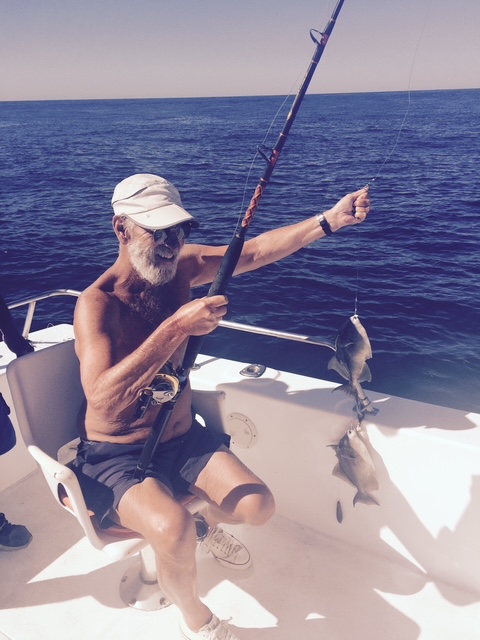
In Memory of My Father
Some of my earliest memories began near the water — learning that food, family, and place are often inseparable.
Safer Catch exists not only because of science and environmental research, but because of the generations of people who built relationships with the water long before most advisories existed.
This work is dedicated to protecting those traditions — and the trust that comes with them — for the next generation.
Fiscal Sponsorship
Safer Catch is a project of Media Alliance, a 501(c)(3) nonprofit organization (EIN 94-2875532), which serves as its fiscal sponsor. Foundations, agencies, and sponsors can direct grants and charitable contributions to Safer Catch through Media Alliance; contributions may be tax deductible as allowed by law.
Start with the Water to Table Advisor™
Six questions. A complete, personalized fish safety and kitchen guidance summary. Built for the water, the market, and the kitchen.
Open the Advisor